Outbound Logistics

Loop ERP Modules & Features

Outbound Logistics Software for Fulfillment, Returns, and Circular Shipping

Ship Smarter. Simplify Complexity. Complete the Loop.

Outbound logistics in the circular economy isn’t just about shipping finished goods to customers. It’s about coordinating diverse movements—resale orders, refurbished items, recycled materials, replacements, and transfers to partners or field sites. Loop ERP’s Outbound Logistics feature function gives you the control, visibility, and flexibility to manage every kind of outbound transaction with precision.

Whether you’re fulfilling a new order, dispatching refurbished inventory, or returning defective materials to a supplier, Loop ERP ensures your outbound processes are optimized, traceable, and efficient.

img
icon

What It Does

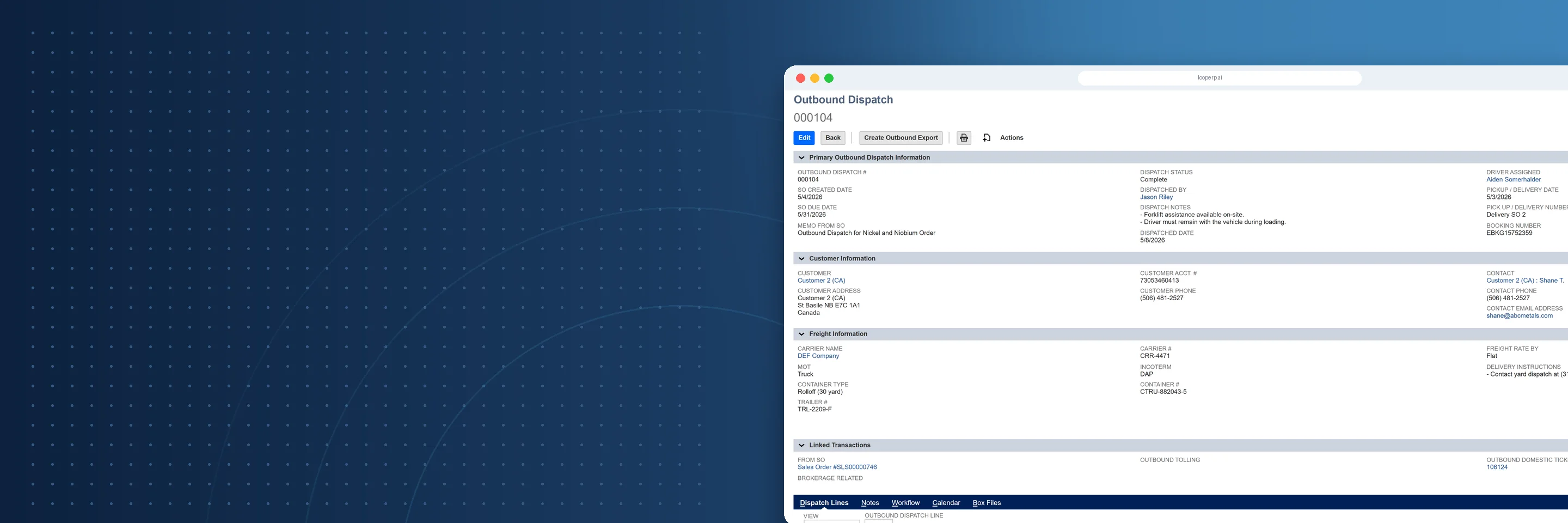
Loop ERP’s Outbound Logistics feature manages the movement of goods out of your business across all scenarios—direct customer shipments, returns and replacements, inter-facility transfers, and reverse logistics. It integrates tightly with warehouse operations, order management, and partner networks to streamline outbound planning, execution, and verification.

In circular operations, where outbound isn’t always final, Loop ERP gives you the tools to handle multi-directional flows with forward-thinking control.

What is outbound logistics software in an ERP?

Outbound logistics software is the part of an ERP system that manages everything involved in moving goods out of your business — order picking, packing, carrier selection, shipment documentation, dispatch coordination, and delivery confirmation — all from a single system rather than a patchwork of spreadsheets and standalone tools. In a standard supply chain, outbound means fulfilling customer orders, and that's largely it. In circular and materials-based operations, outbound is more complex: you're shipping refurbished items to resale channels, returning defective parts to suppliers, transferring inventory between facilities for disassembly or remanufacture, dispatching recycled materials to processing partners, and handling warranty replacements and recalls — often all at the same time, with different documentation requirements for each. A purpose-built outbound logistics module handles that full range natively, with grade-based picking rules, condition statements, carrier optimization, and real-time exception alerts built in. When outbound is connected to the same ERP running your inventory and finance, every shipment that leaves the building immediately updates stock levels, triggers the right billing entry, and creates a traceable record — without anyone making a phone call to find out what shipped.

Key Features

icon

Centralized Dispatch Management

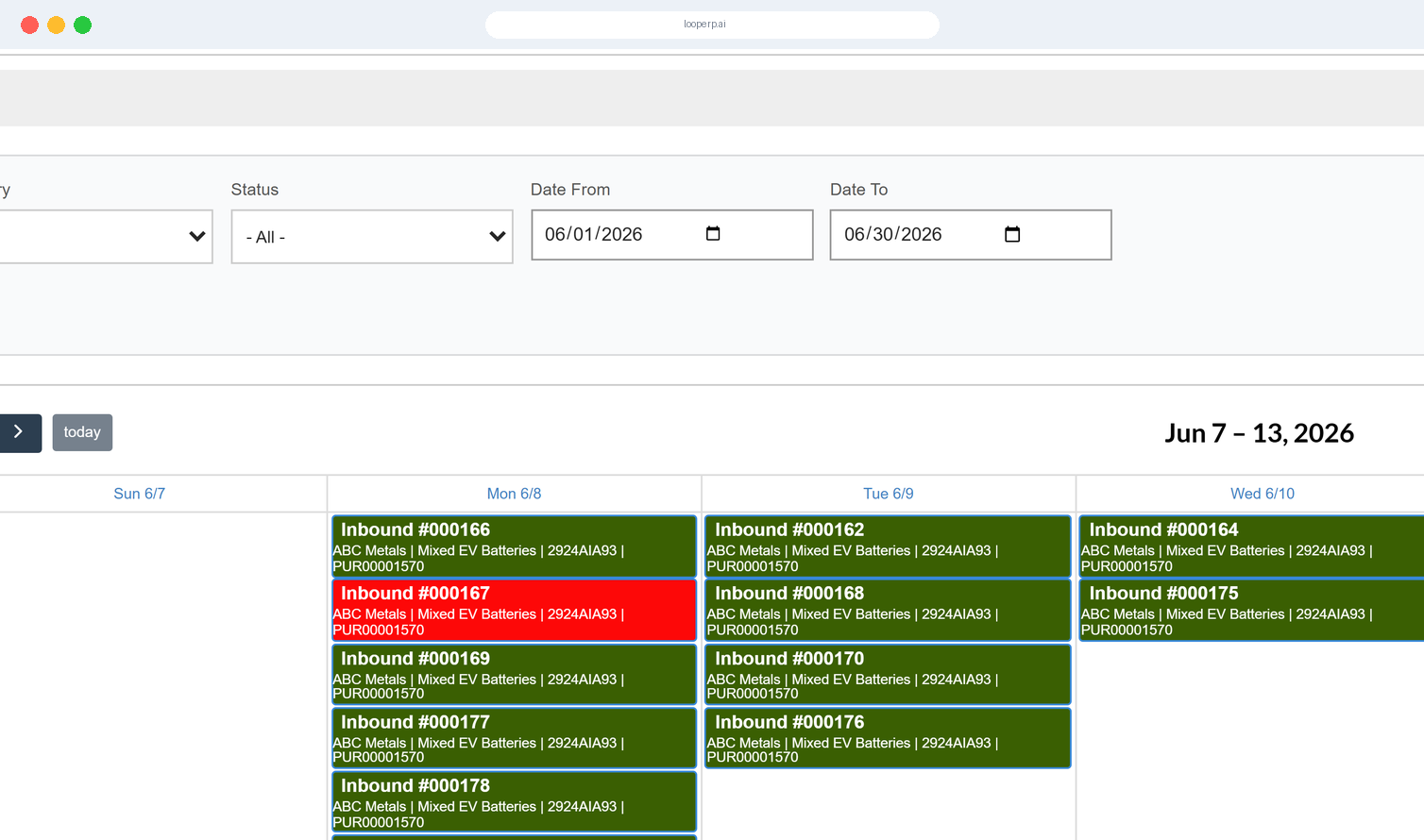
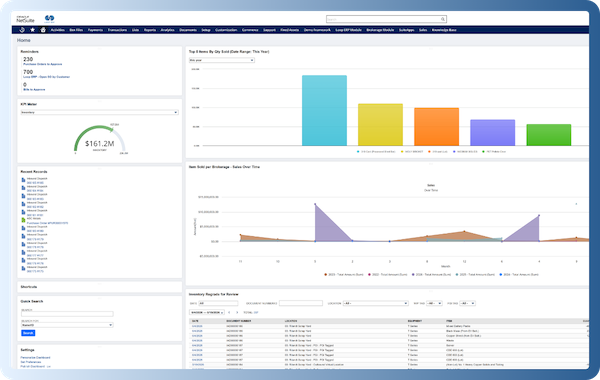
Gain visibility into all scheduled, pending, and in-transit outbound transactions across all business units, facilities, and third-party partners.

icon

Multi-Channel, Multi-Destination Fulfillment

Ship to customers, marketplaces, donation centers, service providers, or recycling facilities—all from a single platform.

icon

Shipment Consolidation and Carrier Optimization

Group similar orders by location or carrier to minimize costs and environmental impact.

icon

Smart Picking by Grade or Certification

Ensure warehouse teams pick items based on the required grade, inspection status, or certification—especially important for resale or compliance-sensitive products.

icon

Returns, Replacements, and Recalls Dispatch

Coordinate outbound shipments triggered by return authorizations, warranty replacements, or product recalls—without disrupting standard fulfillment operations.

icon

Intercompany and Internal Transfers

Manage inventory movements between facilities, subsidiaries, or partner warehouses as part of refurbishment, disassembly, or reallocation workflows.

icon

Documentation and Label Generation

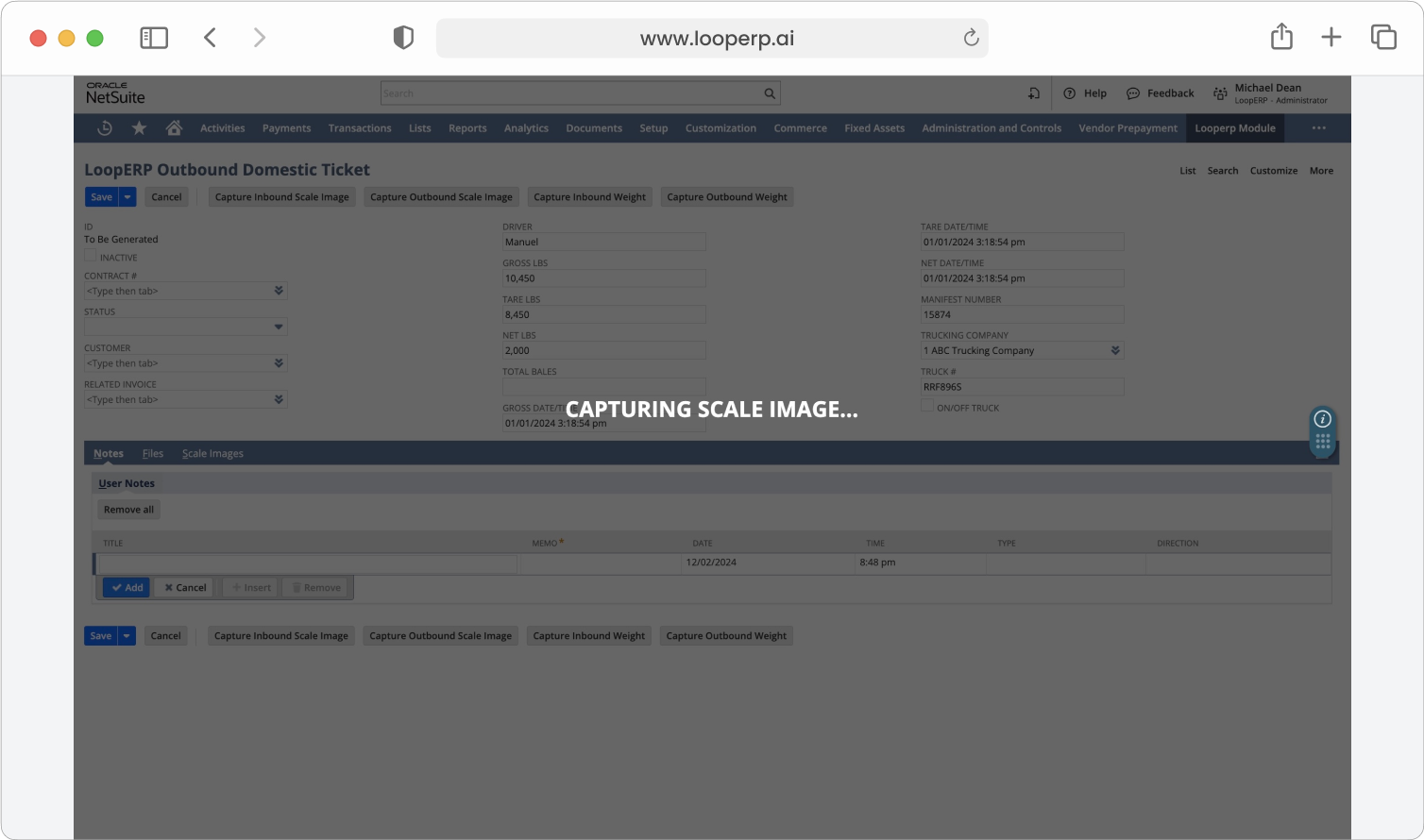
Automatically generate all required shipping documents, including packing slips, shipping labels, bills of lading, and condition statements.

icon

Mobile and Tablet Friendly Execution

Enable warehouse staff to manage outbound tasks on the floor with mobile-friendly interfaces for picking, packing, scanning, and shipping confirmation.

icon

Exception Handling and Real-Time Alerts

Flag issues like inventory mismatches, failed carrier pickups, or missing compliance tags before they become shipment blockers.

img

Circular Outbound

Built for the Circular Outbound Model

Loop ERP is built to support the complexity and flexibility of circular supply chains. That means:

  • Shipping refurbished items to resale channels
  • Sending parts or cores back to suppliers for remanufacture
  • Coordinating multi-stop outbound flows
  • Capturing outbound carbon impact and sustainability metrics

Traditional ERPs assume the outbound process is linear and final. Loop ERP knows that in circular business models, outbound is just another turn in the loop.

Unlock Efficiency at the Final Mile—and Beyond

Whether you’re fulfilling an eCommerce order or coordinating a cross-border resale shipment of refurbished goods, Loop ERP’s Outbound Logistics function gives you the speed, accuracy, and traceability your operations demand.

Schedule a Demo
img

Blogs

Latest Insights

See All Blogs
icon

April 23, 2026

EPR Reporting for Scrap Recyclers: What Your ERP Needs to Handle in 2026

icon

April 13, 2026

What Is Scrap ERP? And Why Generic Systems Fail Scrap Metal Recyclers

icon

March 31, 2026

What Is a Circular Economy ERP? A Plain-English Guide for Scrap, Recycling, and Materials Businesses

See All Blogs

Frequently Asked Questions

Everything you need to know about Loop ERP

Can Loop ERP handle large-scale operations?

icon

Yes. Loop ERP is built on NetSuite, the same platform used by enterprise operators, multi-site businesses, and high-volume processors. It handles multi-entity accounting, consolidated reporting across locations, high daily transaction volumes, and complex settlement structures without slowing down. If you are running one site today and five next year, you do not need to replatform to keep up.

How long does it take to implement Loop ERP?

icon

Implementation time varies, depending on the number of locations, material streams, and integrations involved (scales, cameras, payment processors, third-party logistics). The Loop ERP team handles data migration, workflow configuration, integration, and training in parallel, and we work directly with your operations leads, not just IT, so the system matches how your business actually runs on day one.

What makes Loop ERP different from other ERP systems?

icon

Most ERP systems treat inventory as static boxes on a shelf. Loop is built for inventory that changes grade, weight, and value at every step, which is how scrap, recycling, aggregate, brokerage, and similar materials-based businesses actually work. It is also NetSuite-native, so you do not need a separate accounting package, a middleware layer, or a patchwork of integrations to get from inbound ticket to closed financials. One login, one system, one source of truth for operations and finance.

What support does Loop ERP offer?

icon

Loop ERP provides implementation support, training for operations and finance teams, and ongoing technical support after go-live. Clients get access to documentation, how-to guides, and direct consultation with our team for troubleshooting, configuration changes, and new workflow setup. Support is handled by people who understand the difference between a ticketing issue and a grading exception, not a generic help desk working from a script.

How secure is Loop ERP?

icon

Loop ERP runs on Oracle NetSuite, so your data lives inside enterprise cloud infrastructure with encryption in transit and at rest, role-based access, and audit logging on every transaction. Ticket edits, grade changes, and settlement adjustments all carry a user stamp and timestamp. If a record is overridden or reclassified, you can see who did it and when, which matters for disputes, audits, and internal controls.