Finance & Settlements

Loop ERP Modules & Features

Flexible Financials for Circular Value Flow

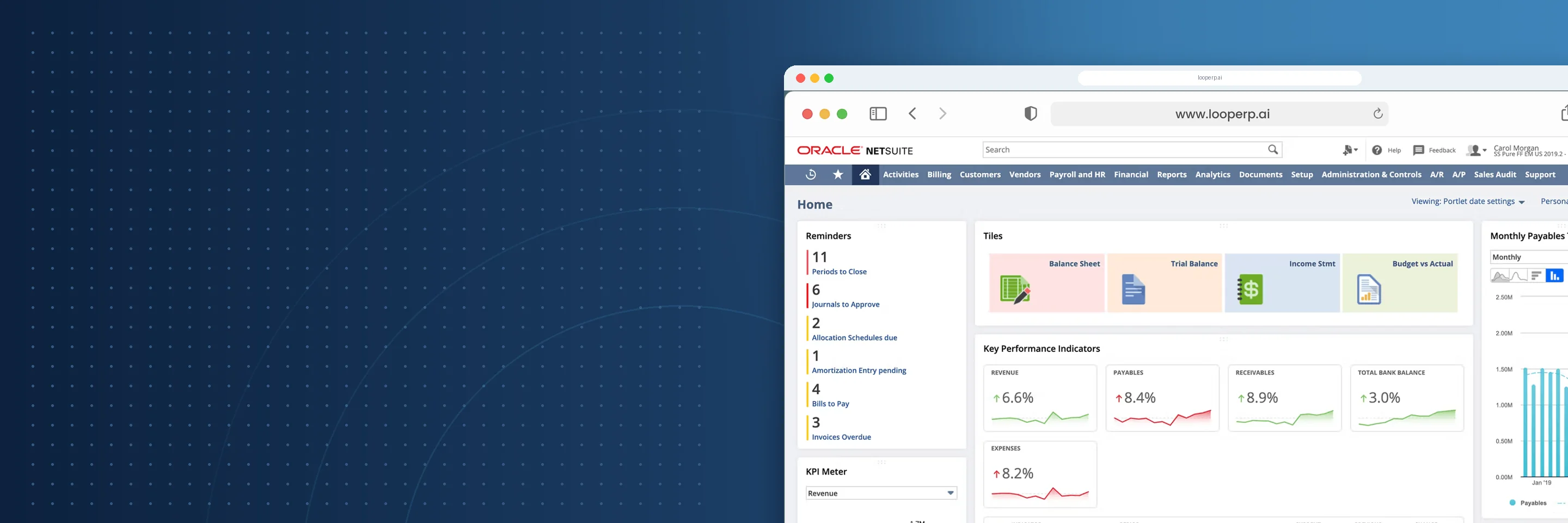
In the circular economy, financial processes are anything but linear. You buy, sell, recover, refurbish, and resell—often with the same partners playing multiple roles. Materials return. Values change. Credits, offsets, and revaluations happen constantly. Traditional ERP systems struggle with this. Loop ERP’s Finance & Settlements feature function is built to match the circular movement of goods with equally dynamic financial logic.

From automated credit issuance and netting to cross-functional settlements and condition-based revaluations, Loop ERP ensures that your financial records remain accurate, agile, and audit-ready.

img
icon

What It Does

Loop ERP’s Finance & Settlements feature streamlines the entire financial lifecycle of circular transactions—from initial invoice generation to credit reconciliation, regrade-based adjustments, and partner settlements. It handles financial complexity created by returns, repairs, disassembly, reuse, and supplier/customer duality—all within a unified accounting framework.

It’s not just accounting—it’s circular finance.

What is Settlement Automation in ERP?

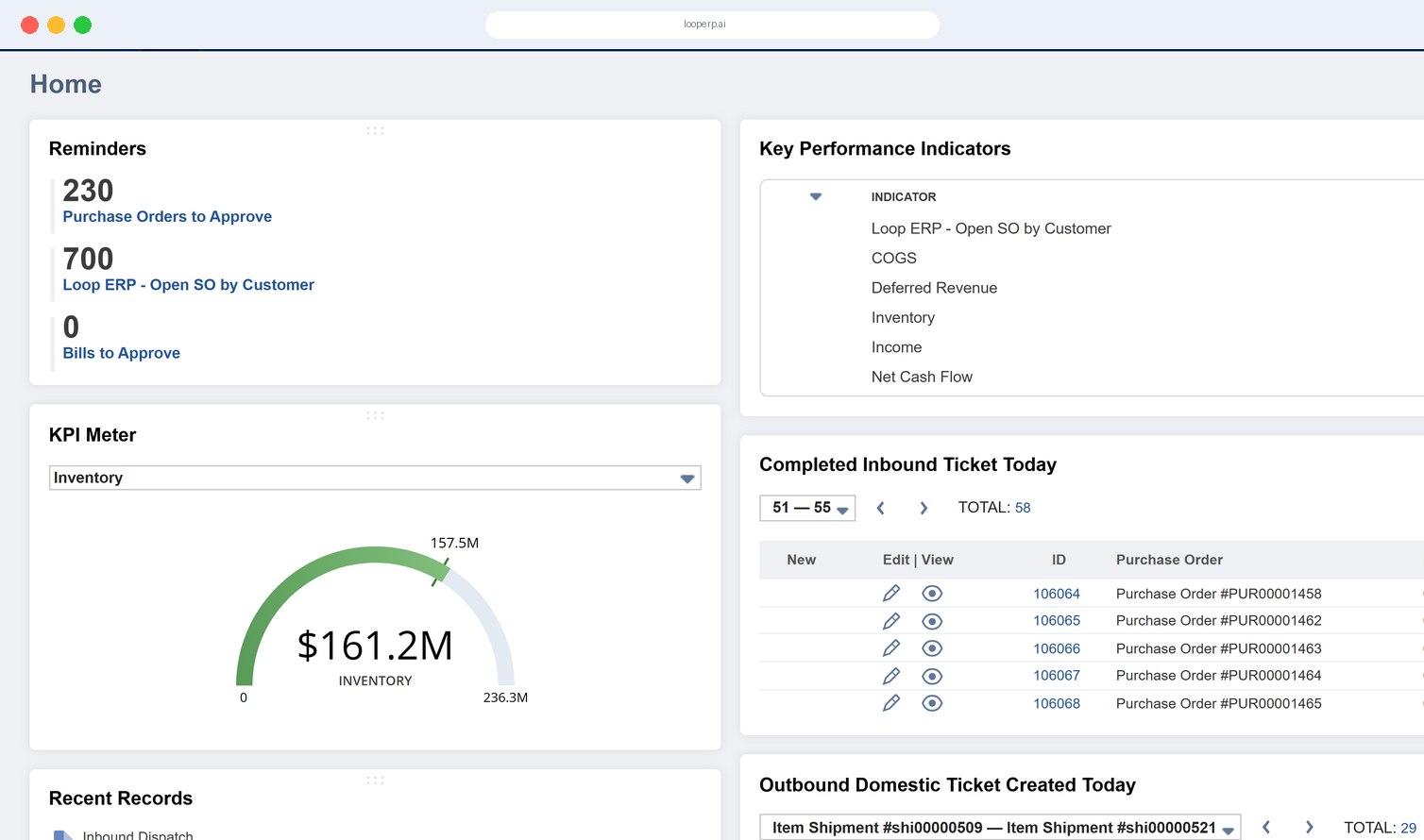
Settlement automation in ERP is the process of calculating, reconciling, and closing financial transactions between trading partners without manual intervention. In circular economy businesses — scrap, recycling, refurbishment, brokerage, and materials processing — settlement is more complex than a standard invoice-and-pay cycle. The same partner often buys from you and sells to you. Materials change value as they move through grading, repair, or reprocessing. Credits, chargebacks, contamination deductions, and netting calculations all need to happen accurately and fast. Generic ERP systems handle straightforward accounts payable and receivable, but they weren't built for bidirectional relationships or condition-based revaluations. Purpose-built settlement automation connects the physical movement of goods, quality outcomes, and financial records into one workflow — so you close transactions on time, with a clean audit trail, and without a spreadsheet in the middle.

Key Features

icon

Automated Settlement of Returns, Repairs, and Offsets

Eliminate manual credit and re-billing processes. Automatically issue financial settlements for returned items, repair credits, refurbished replacements, or parts reallocated from disassembly.

icon

Condition-Based Valuation and Revaluation

Track and adjust the financial value of inventory based on real-time changes in condition, grade, or marketability—crucial for businesses that refurbish or reclaim goods.

icon

Netting Engine for Bidirectional Relationships

When a partner is both your supplier and your customer, Loop ERP can automatically offset transactions to reduce financial friction.

icon

Multi-Party and Multi-Condition Billing Logic

Create invoices and settlements that reflect the true value journey of a product, even when it’s touched by multiple parties or has changed condition multiple times.

icon

Credit & Chargeback Automation

Support automated issuance of credit memos, chargebacks, or restocking fees based on return reason codes, SLA breaches, or damage assessments.

icon

Partner and Customer Settlement Portals

Give customers, vendors, and partners real-time access to billing history, credit status, and open disputes—reducing back-office workload and improving transparency.

icon

Audit Trails and Compliance Tracking

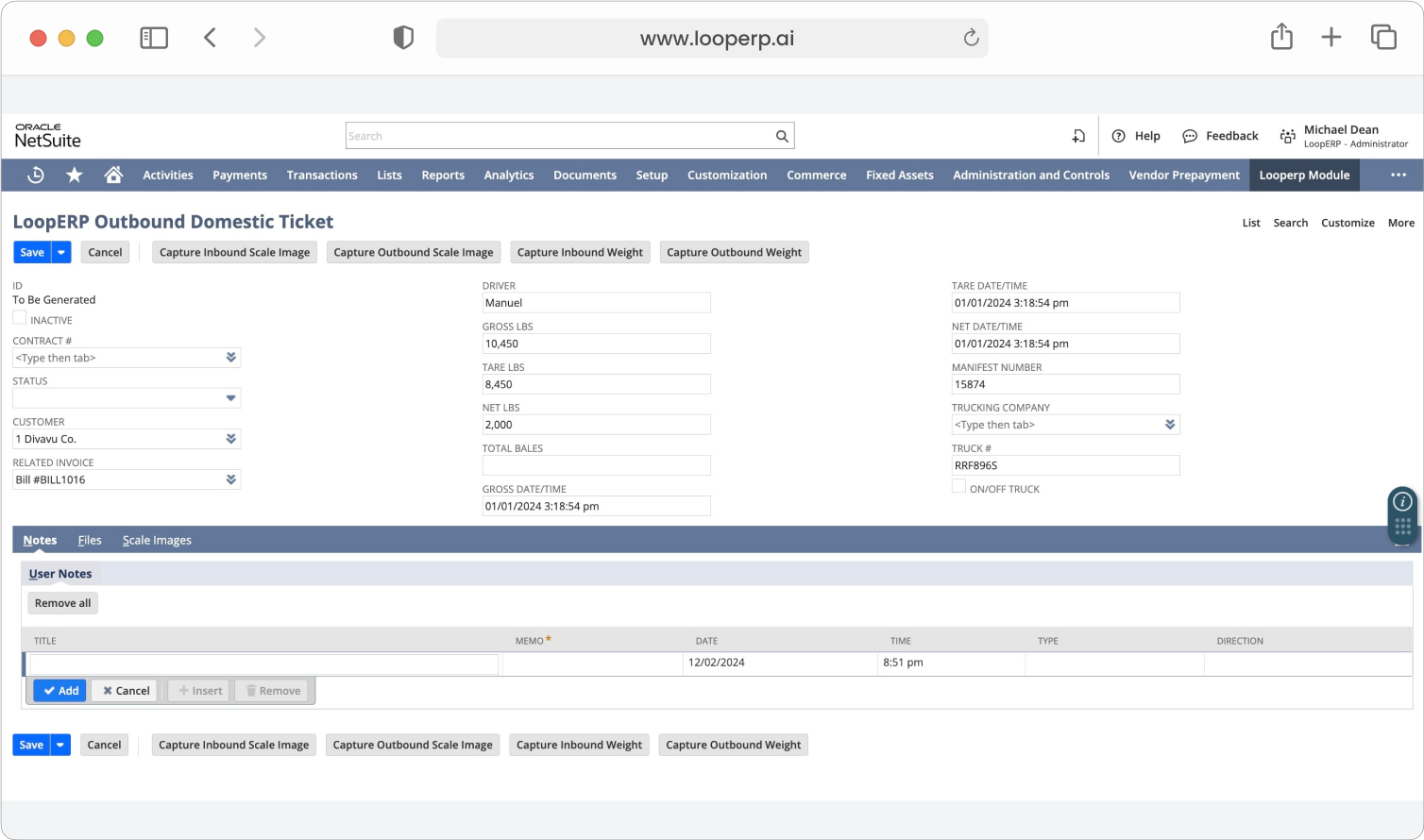
Every financial transaction—credit, revaluation, offset, refund, or charge—is logged with supporting documentation, timestamps, and user history.

icon

Seamless Integration with Core Accounting

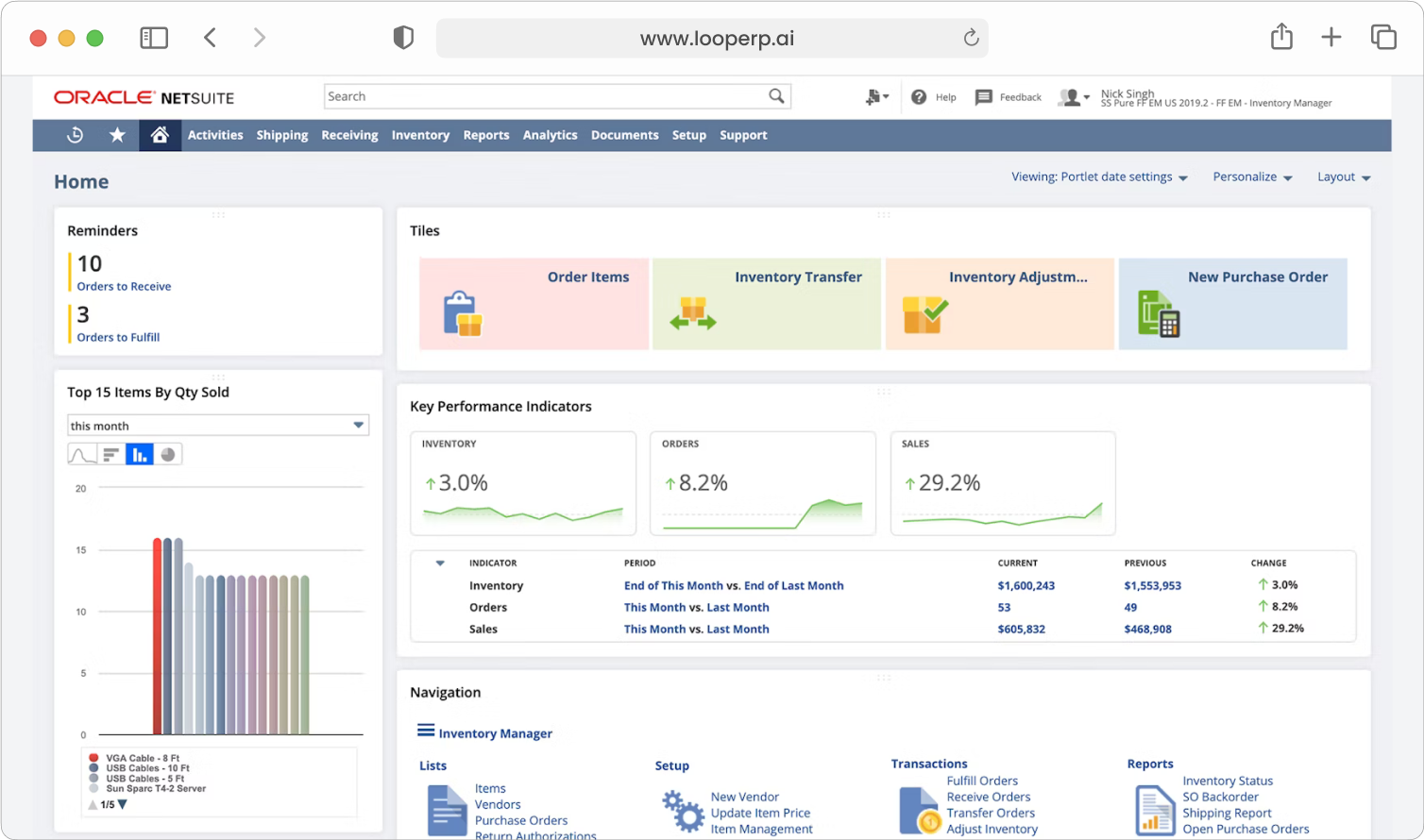
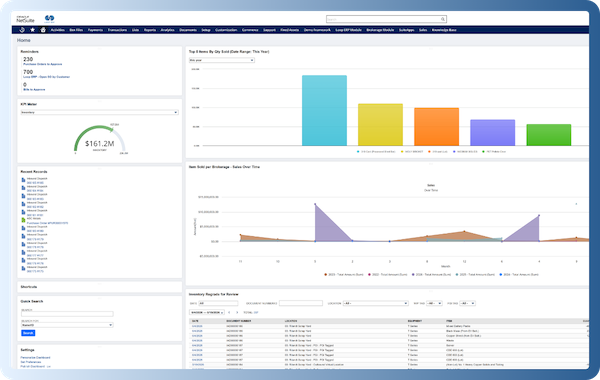
Loop ERP’s financial engine integrates directly with your general ledger, subledgers, and financial statements—so your books reflect the true financial impact of circularity.

img

Finance Designed for Circular Commerce

Loop ERP’s financial engine integrates directly with your general ledger, subledgers, and financial statements—so your books reflect the true financial impact of circularity.

  • Chart of accounts tailored for refurb, recovery, and reuse
  • Multi-entity, multi-currency support
  • Reconciles inventory movement with financial performance

Loop ERP’s Finance & Settlements feature is designed for fluid value exchange—so your books, your partners, and your processes stay in sync with your purpose.

Settle Fast. Stay Accurate. Stay Circular.

Whether you're processing thousands of customer returns, managing complex supplier relationships, or revaluing inventory post-repair, Loop ERP helps you settle what matters—with clarity, automation, and audit-ready control.

Schedule a Demo
img

Blogs

Latest Insights

See All Blogs
icon

April 23, 2026

EPR Reporting for Scrap Recyclers: What Your ERP Needs to Handle in 2026

icon

April 13, 2026

What Is Scrap ERP? And Why Generic Systems Fail Scrap Metal Recyclers

icon

March 31, 2026

What Is a Circular Economy ERP? A Plain-English Guide for Scrap, Recycling, and Materials Businesses

See All Blogs

Frequently Asked Questions

Everything you need to know about Loop ERP

Can Loop ERP handle large-scale operations?

icon

Yes. Loop ERP is built on NetSuite, the same platform used by enterprise operators, multi-site businesses, and high-volume processors. It handles multi-entity accounting, consolidated reporting across locations, high daily transaction volumes, and complex settlement structures without slowing down. If you are running one site today and five next year, you do not need to replatform to keep up.

How long does it take to implement Loop ERP?

icon

Implementation time varies, depending on the number of locations, material streams, and integrations involved (scales, cameras, payment processors, third-party logistics). The Loop ERP team handles data migration, workflow configuration, integration, and training in parallel, and we work directly with your operations leads, not just IT, so the system matches how your business actually runs on day one.

What makes Loop ERP different from other ERP systems?

icon

Most ERP systems treat inventory as static boxes on a shelf. Loop is built for inventory that changes grade, weight, and value at every step, which is how scrap, recycling, aggregate, brokerage, and similar materials-based businesses actually work. It is also NetSuite-native, so you do not need a separate accounting package, a middleware layer, or a patchwork of integrations to get from inbound ticket to closed financials. One login, one system, one source of truth for operations and finance.

What support does Loop ERP offer?

icon

Loop ERP provides implementation support, training for operations and finance teams, and ongoing technical support after go-live. Clients get access to documentation, how-to guides, and direct consultation with our team for troubleshooting, configuration changes, and new workflow setup. Support is handled by people who understand the difference between a ticketing issue and a grading exception, not a generic help desk working from a script.

How secure is Loop ERP?

icon

Loop ERP runs on Oracle NetSuite, so your data lives inside enterprise cloud infrastructure with encryption in transit and at rest, role-based access, and audit logging on every transaction. Ticket edits, grade changes, and settlement adjustments all carry a user stamp and timestamp. If a record is overridden or reclassified, you can see who did it and when, which matters for disputes, audits, and internal controls.