Municipal Waste Facilities Industry

Powering Smarter, Cleaner Cities with Integrated ERP

img

Waste ERP

Why Loop ERP?

Municipal waste facilities operate at the frontline of community sustainability. Whether you're managing landfills, transfer stations, curbside collections, or MRFs (Materials Recovery Facilities), you need a system that unifies operations, compliance, logistics, and financial accountability.

Loop ERP replaces spreadsheets and outdated tools with a modern ERP platform designed specifically for waste and recycling infrastructure—enhancing traceability, boosting efficiency, and supporting regulatory and ESG goals.

What Is ERP Software for Municipal Waste Facilities?

ERP software for municipal waste facilities is a system that manages material intake, scale operations, waste classification, diversion tracking, contractor coordination, tipping fee invoicing, and compliance reporting within one platform. MRFs, transfer stations, and landfills operate under regulatory frameworks — CalRecycle, EPA, local diversion mandates — that require accurate, audit-ready records across every load. Legacy systems and spreadsheets can't reconcile tipping fee revenue with material sales, track diversion rates in real time, or give city managers and finance the same visibility that operations has on the floor. A purpose-built ERP connects all of that so compliance is built into the workflow, not assembled manually at reporting time.

The Only All-in-One System You Need

Everything Under One Roof

Loop ERP connects your entire operation—scale operations, waste classification, invoicing, route optimization, compliance, and public reporting—within one secure platform.

1

Built on Oracle NetSuite for embedded finance, CRM, and workflow automation

2

Centralized data across locations, departments, and contractors

3

Real-time access for supervisors, scale house, haulers, finance, and city managers

4

Built for Municipal Waste Operations, by Waste Industry Experts

Facility-Specific Workflows

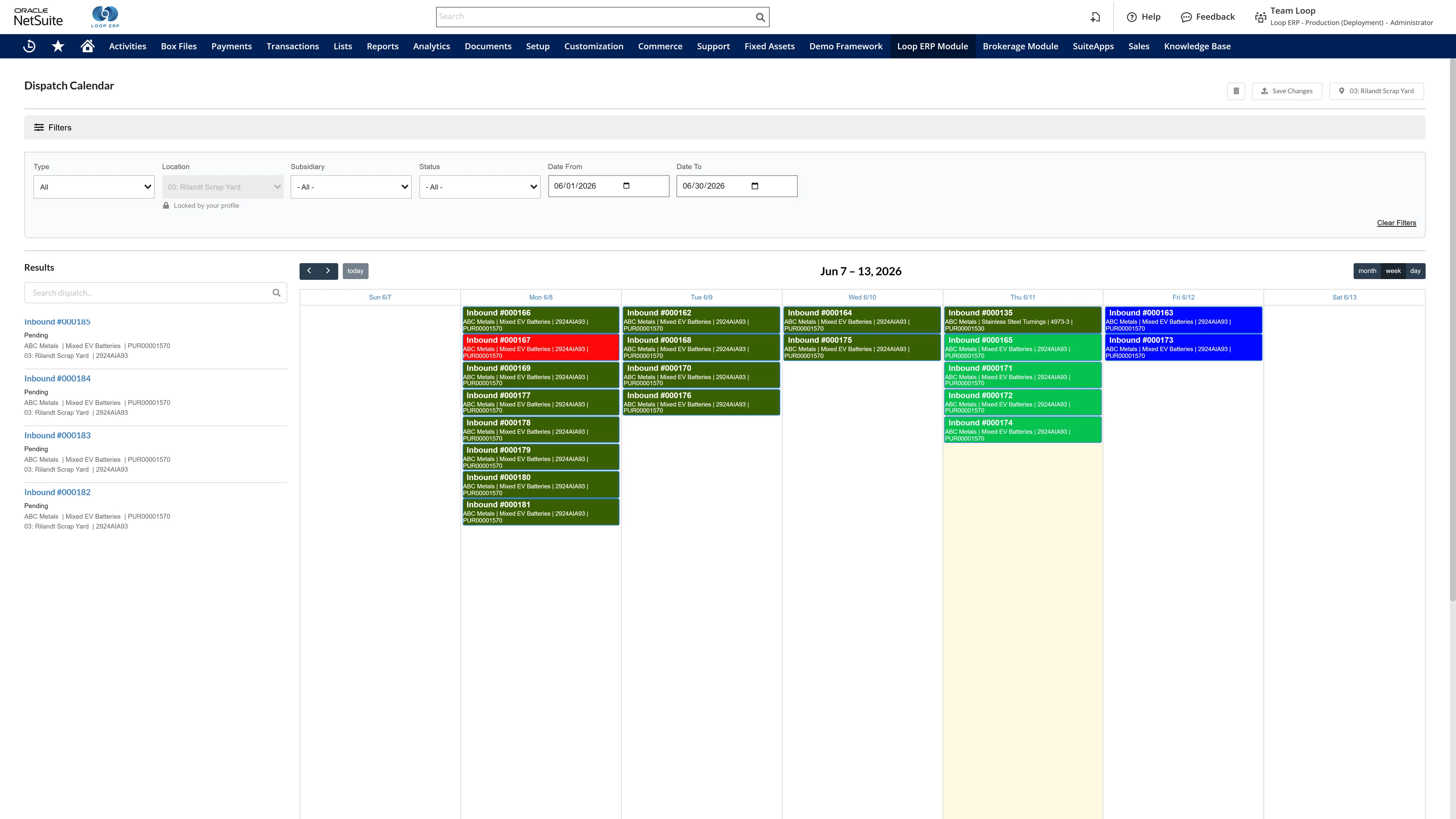
From residential curbside pickup to commercial tipping and MRF processing, Loop ERP supports your workflows with role-specific dashboards and automated reporting.

icon

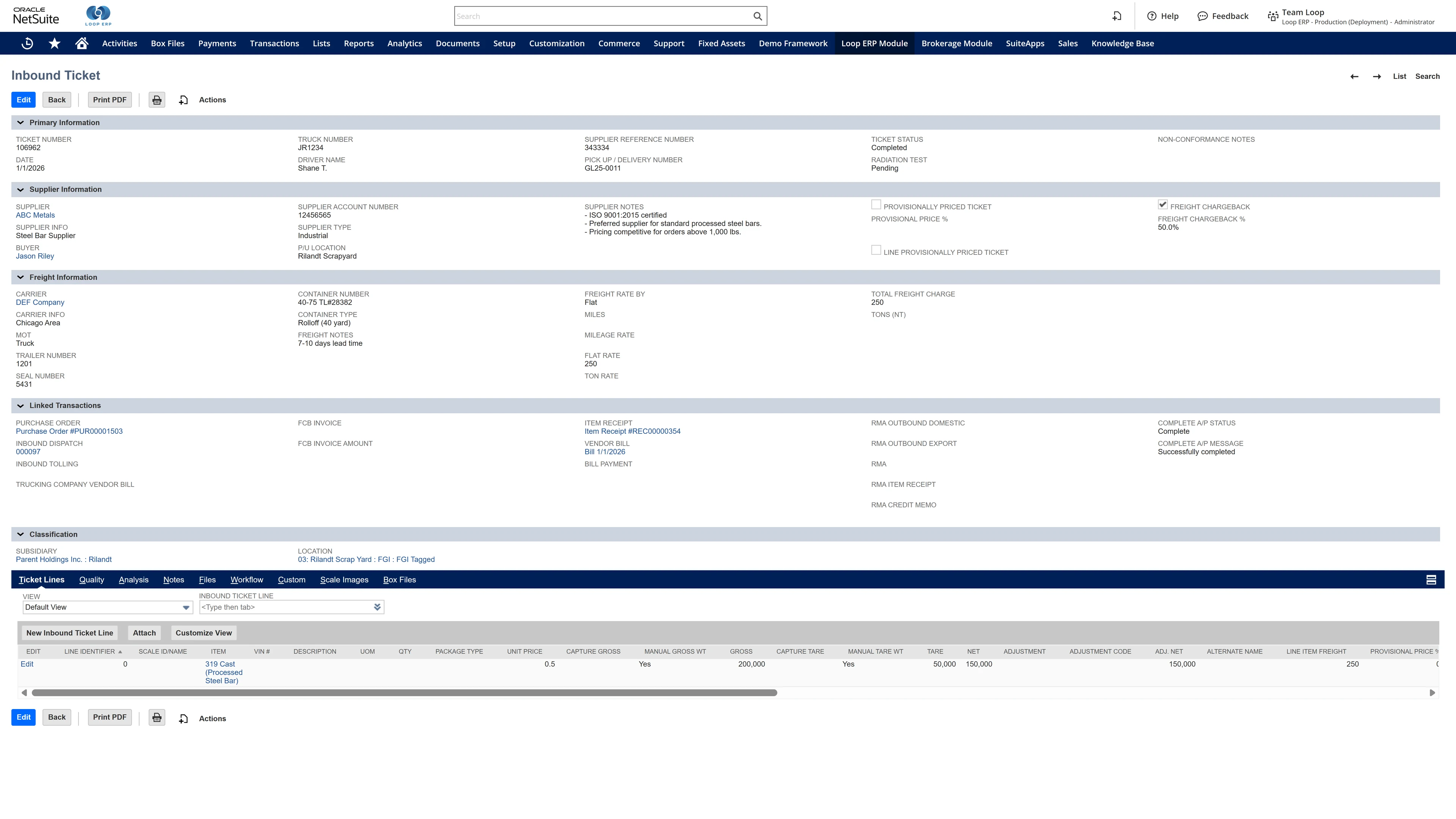
Inbound & Outbound Ticketing

  • Log waste loads by origin (residential, commercial, industrial)
  • Track by waste stream: MSW, green waste, C&D, e-waste, HHW, recycling
  • Tie outbound tickets to recycling partners, landfills, or processors
icon

Scale Integration

  • Real-time capture of gross/tare/net weights by vehicle and commodity
  • Integrate with RFID, license plate recognition, or digital kiosks
  • Automate ticket generation, invoicing, and load flagging
icon

Camera Integration

  • Document load condition at entry and exit for contamination or enforcement
  • Store time-stamped images tied to ticket ID or hauler account
icon

QA & Compliance Monitoring

  • Track diversion rates, contamination levels, and incident logs
  • Support CalRecycle, EPA, and local waste board compliance requirements
  • Automate regulatory reporting by tonnage, category, or hauler
icon

Mobile Applications

  • Empower scale attendants, drivers, and supervisors with mobile tools
  • Log contamination, illegal dumping, or overflow incidents from the field
  • Enable route supervisors to report exceptions and GPS-tag events
icon

Track & Trace

  • Monitor materials from bin to tipping floor to processor or disposal site
  • Support transparency for EPR, franchise zones, and contracted haulers
  • Enable audit trails by route, load, zone, or program
icon

Quality Control

  • Flag non-conforming loads (e.g. wet cardboard, mixed organics, e-waste)
  • Enforce hold, inspection, or fee assessment procedures
  • Record and report QA outcomes across vendors or programs
icon

Netting

  • Reconcile inbound tipping fees with outbound material revenue
  • Track cost recovery, franchise payments, or disposal rebates
  • Net payments between departments or public-private partners
icon

Extremely Flexible Pricing Module

  • Configure fees by waste type, customer class, contamination level, or volume
  • Support seasonal or zone-based rates for special collections or cleanups
  • Replace rate tables and spreadsheets with automated fee structures
img
icon

AI-Driven Insights & Automation

Intelligence That Works for You

  • Predict contamination trends and flag high-risk routes
  • Optimize collection routes based on load data and seasonal changes
  • Automate reporting for diversion, landfill capacity, and compliance metrics

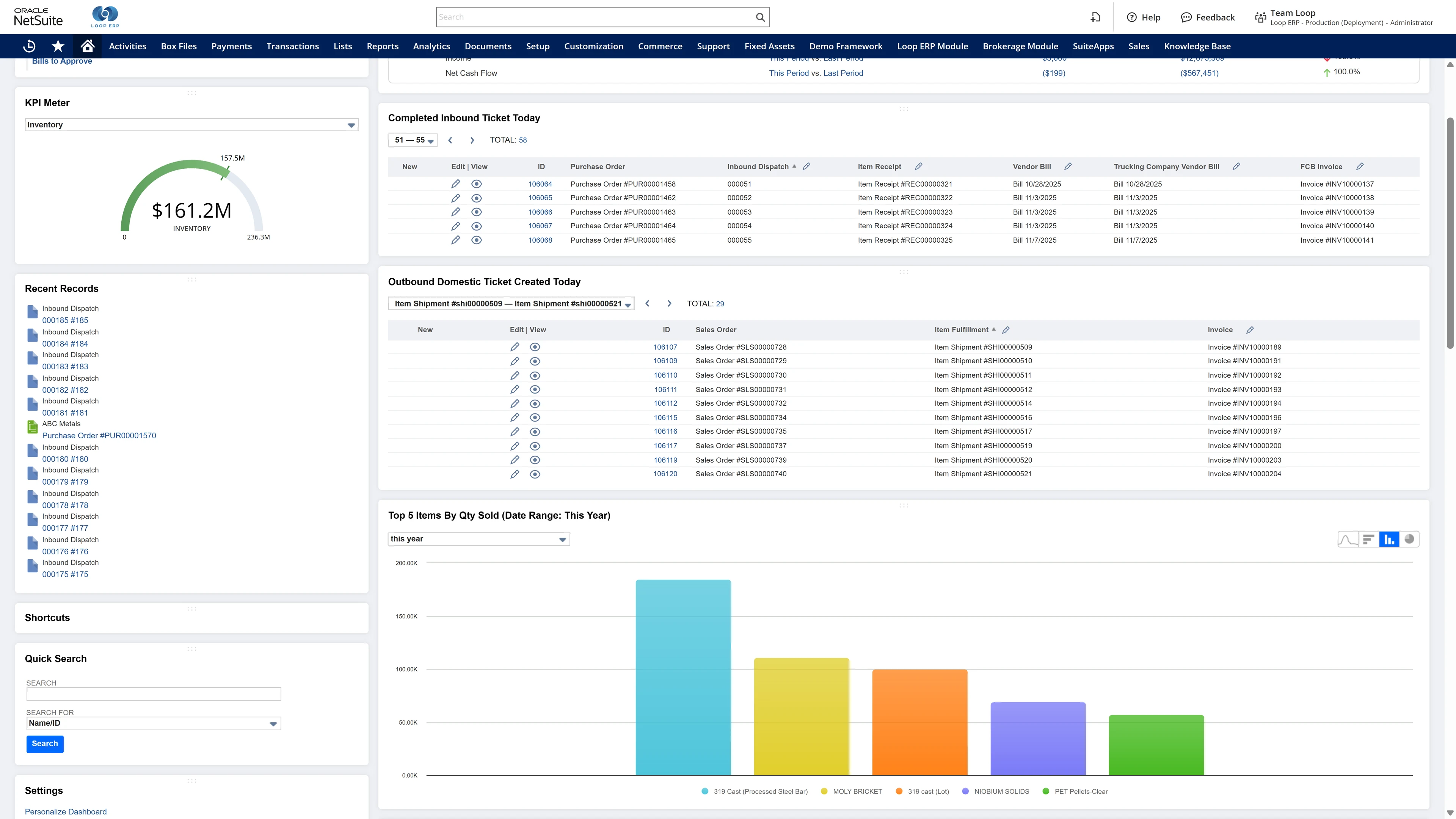
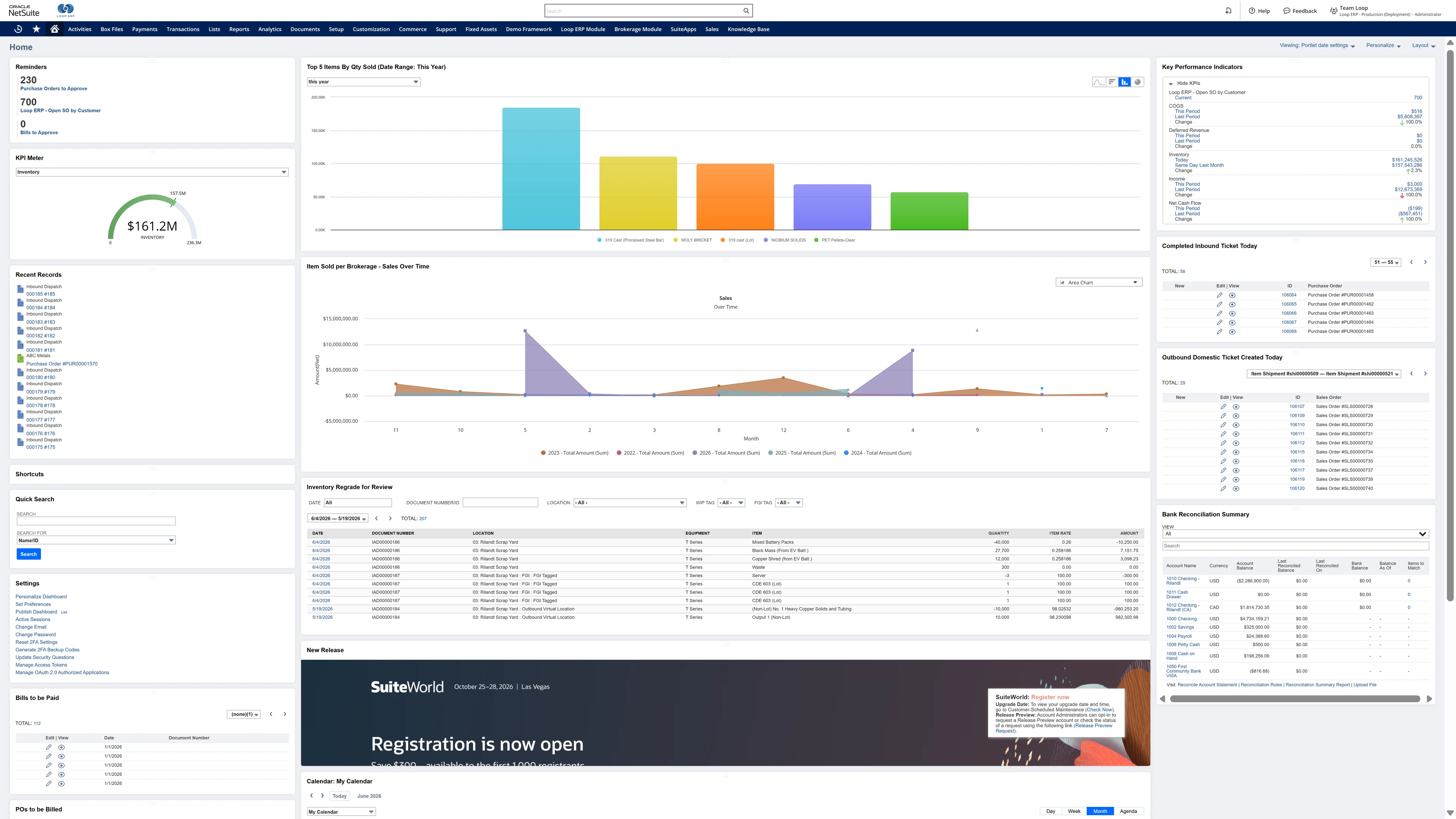
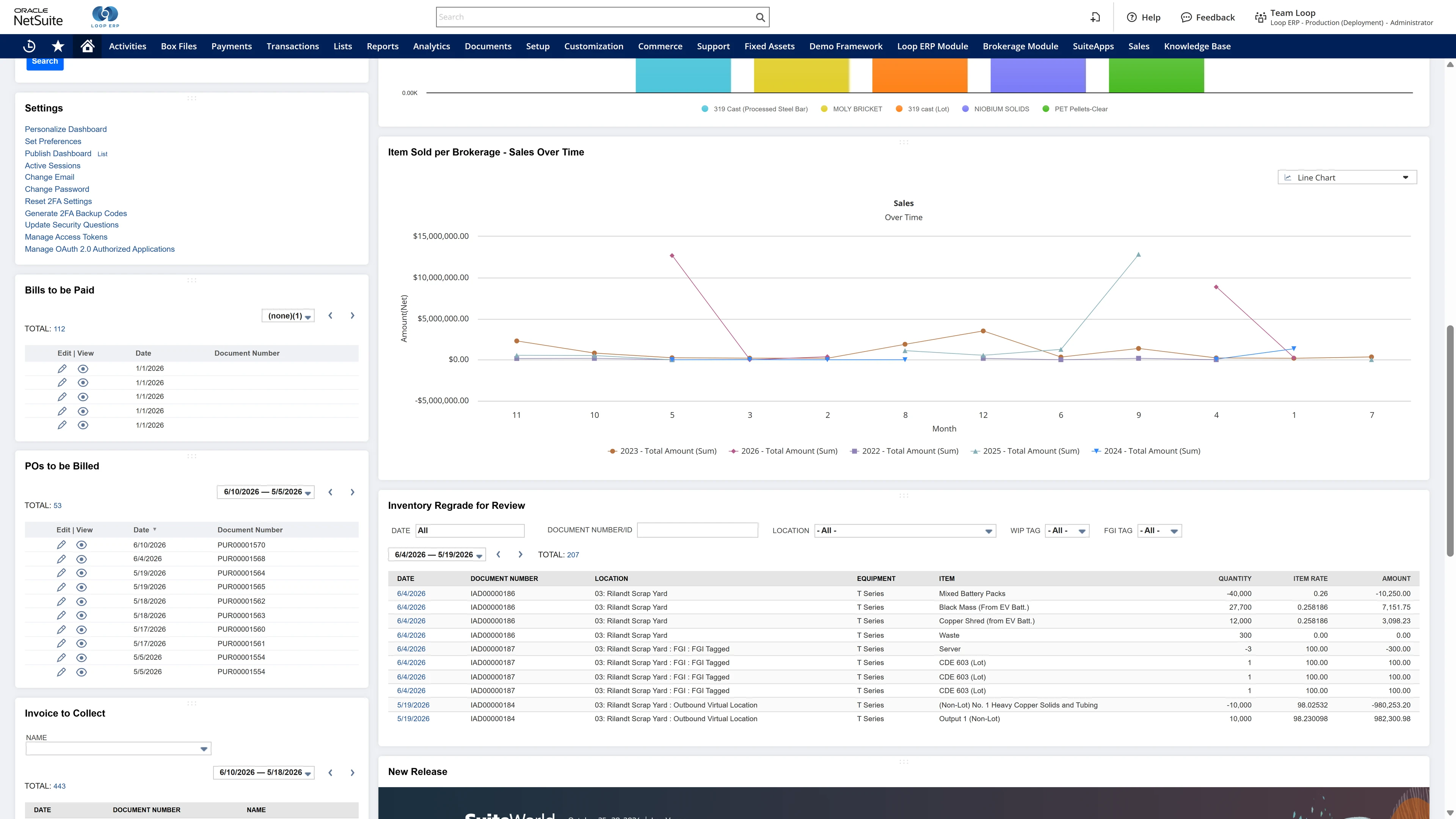
Real-Time Dashboards

Real-World Decisions

  • View operational KPIs by facility, hauler, zone, or waste stream
  • Track load counts, diversion rates, contamination events, and tipping revenue
  • Monitor compliance goals, grant program results, and public participation metrics
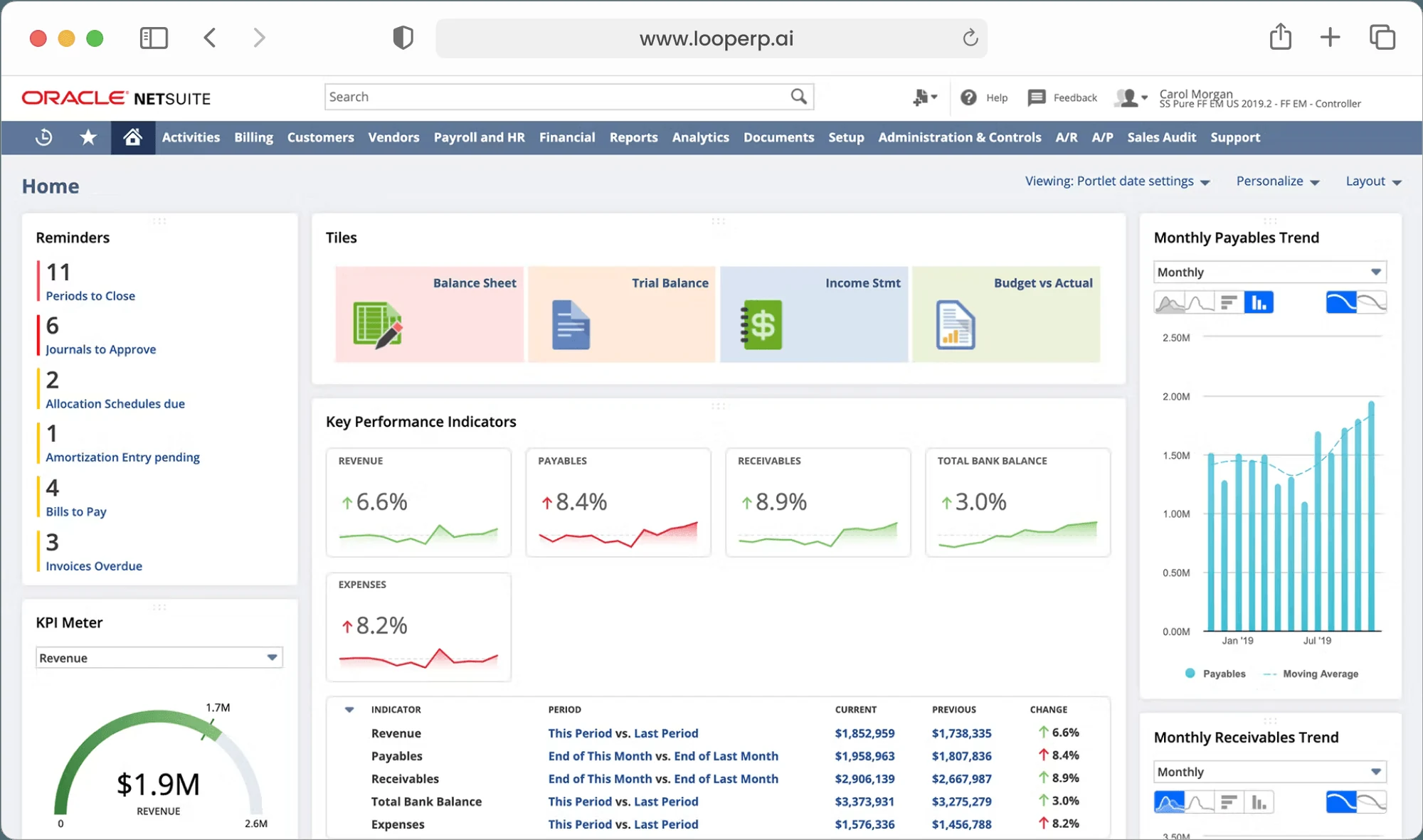
Loop ERP Dashboard
icon

Bring Order to Waste with Loop ERP

Transform your municipal waste facility with real-time visibility, streamlined operations, and smarter public service.

Ready to modernize your waste workflows?

Book Your Demo

Key Features & Benefits

Highlights at a Glance

Feature

✅ All-in-One Platform

⚖️ Scale & Camera Integration

🧠 AI Assistance

💵 Built-in Finance

📊 Role-Based Dashboards

♻️ Waste-Specific Workflows

📱 Mobile Applications

🔄 Track & Trace

✅ Quality Control

🔗 Netting

💲 Flexible Pricing Module

Benefit

Integrated ERP for public works and waste facilities

Verified loads and visual documentation

Route optimization, anomaly alerts, and auto-reporting

Fund management, tipping fee automation, and reporting

Custom views for city managers, scale ops, and finance

Supports all material types, routes, and vendors

Field and facility apps for real-time operations

End-to-end transparency from pickup to processor

Contamination and compliance enforcement

Automate inter-agency or hauler revenue sharing

Automate fees by waste type, volume, and class

Frequently Asked Questions

Everything You Need to Know About Loop ERP

How does Loop ERP handle supplier settlements and vendor payments?

icon

Loop ERP automates supplier payments based on ticket data, net weight, and grade. It supports deductions, freight netting, multi-party deals, consignment sales, and joint ventures. Buyers receive invoices that break out surcharges, alloy adjustments, and transport costs — all generated from the same ticket data that drives operations.

What platform is Loop ERP built on?

icon

Loop is built on Oracle NetSuite, which means you get enterprise-grade accounting, CRM, and financial reporting built in. There is no separate accounting system to sync with, and no additional middleware between your operations and your books.

How secure is Loop ERP?

icon

Loop ERP runs on Oracle NetSuite, so your data lives inside enterprise cloud infrastructure with encryption in transit and at rest, role-based access, and audit logging on every transaction. Ticket edits, grade changes, and settlement adjustments all carry a user stamp and timestamp. If a record is overridden or reclassified, you can see who did it and when, which matters for disputes, audits, and internal controls.

How does Loop ERP help with sustainability reporting?

icon

Loop ERP pulls data straight from the same ticket and inventory records that run the yard, so sustainability reports reflect what actually moved, not a separate data set. Real-time dashboards track tons recycled by material, carbon saved, and landfill diversion by facility or customer. When a buyer or regulator asks for proof, you can produce a traceable record tied to specific loads, grades, and destinations instead of rebuilding it from spreadsheets.

Can Loop ERP handle large-scale operations?

icon

Yes. Loop ERP is built on NetSuite, the same platform used by enterprise recyclers, multi-yard operators, and shredder networks. It handles multi-entity accounting, consolidated reporting across locations, high daily ticket volumes, and complex settlement structures without slowing down. If you are running one yard today and five next year, you do not need to replatform to keep up.

How long does it take to implement Loop ERP?

icon

Implementation time varies, depending on the number of locations, material streams, and integrations involved (scales, cameras, payment processors, third-party logistics). The Loop ERP team handles data migration, workflow configuration, scale integration, and training in parallel, and we work directly with your operations leads, not just IT, so the system matches how your yard actually runs on day one.

What makes Loop ERP different from other ERP systems?

icon

Most ERP systems treat inventory as static boxes on a shelf. Loop ERP is built for inventory that changes grade, weight, and value at every step, which is how scrap, recycling, aggregate, brokerage, and similar materials-based businesses actually work. It is also NetSuite-native, so you do not need a separate accounting package, a middleware layer, or a patchwork of integrations to get from inbound ticket to closed financials. One login, one system, one source of truth for operations and finance.