Aggregate Industry

Aggregate ERP Software for Quarries, Pits, and Asphalt Operations

img

Aggregate ERP

Why Loop ERP?

Running quarries, pits, concrete plants, or asphalt operations demands accurate ticketing, dependable scale data, coordinated dispatch, and financial alignment across every site. Loop ERP is built for operators managing crushed stone, sand, gravel, ready-mix loads, asphalt production, and blended material workflows.

Whether you handle hundreds of daily inbound hauls, run multi-site inventory, or coordinate regional dispatch schedules, Loop ERP replaces spreadsheets and disconnected tools with a single system that tickets, tracks, invoices, and reports with precision.

What is Aggregate ERP Software?

Aggregate ERP software is an enterprise resource planning system built around the operational reality of quarrying, pit mining, and materials processing. It connects the scale house, dispatch, inventory, production, and finance into one system instead of managing each function separately. The reason aggregate operators need industry-specific ERP rather than a generic system comes down to ticketing and weight data: every transaction in the business starts with a scale ticket, and that ticket needs to flow automatically into inventory, billing, and reporting without anyone re-entering it. Aggregate ERP is built to handle that chain, along with multi-site inventory, haul cycle tracking, and product mix management across crushed stone, sand, gravel, ready-mix, and asphalt.

The Only All-in-One System You Need

Everything Under One Roof

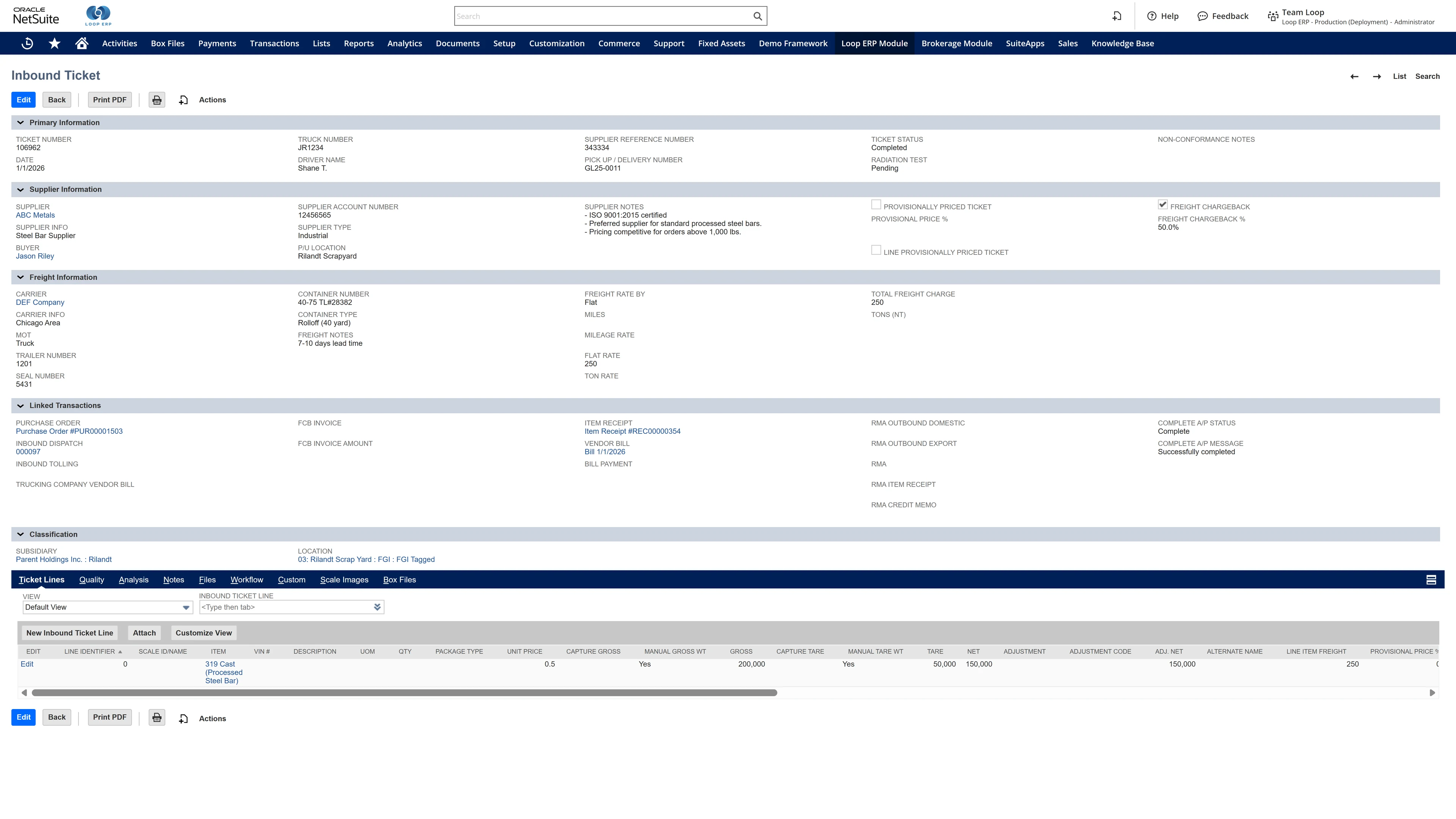
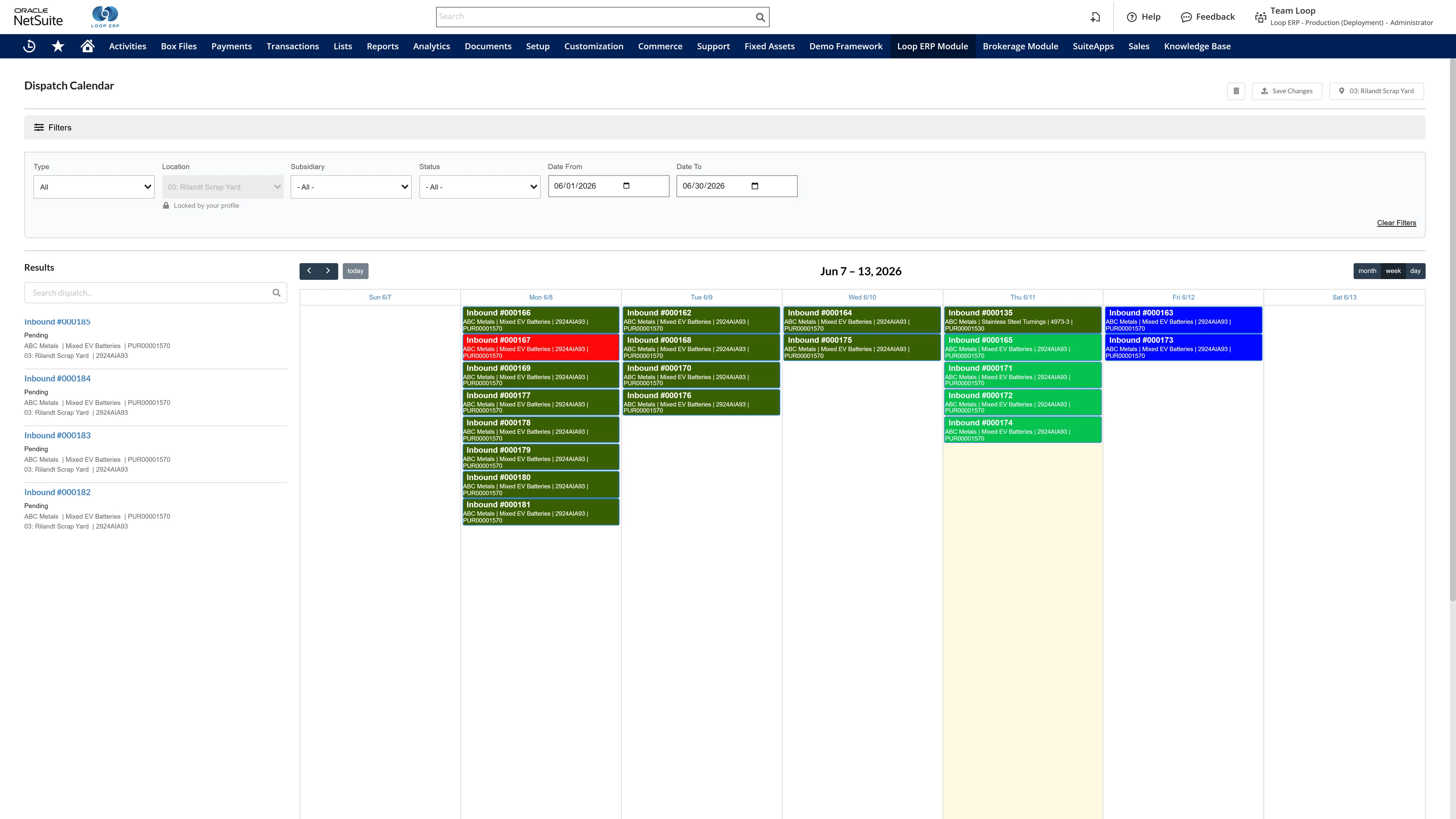
Loop ERP connects scale house, dispatch, production, inventory, and finance to keep your business aligned from first ticket to final settlement.

1

2

3

4

Built for Quarry and Aggregate Teams by Industry Operators

Material-Driven Workflows

Loop ERP supports aggregates, asphalt, ready-mix, recycled materials, and blended mixes with configurable processes tailored to each site.

img
icon

Smart Insights and Automation

Intelligence That Works for You

  • Spot weight inconsistencies across sites or customers
  • Recommend alternate routes, load adjustments, or production shifts
  • Forecast margin and material demand using history and active pricing

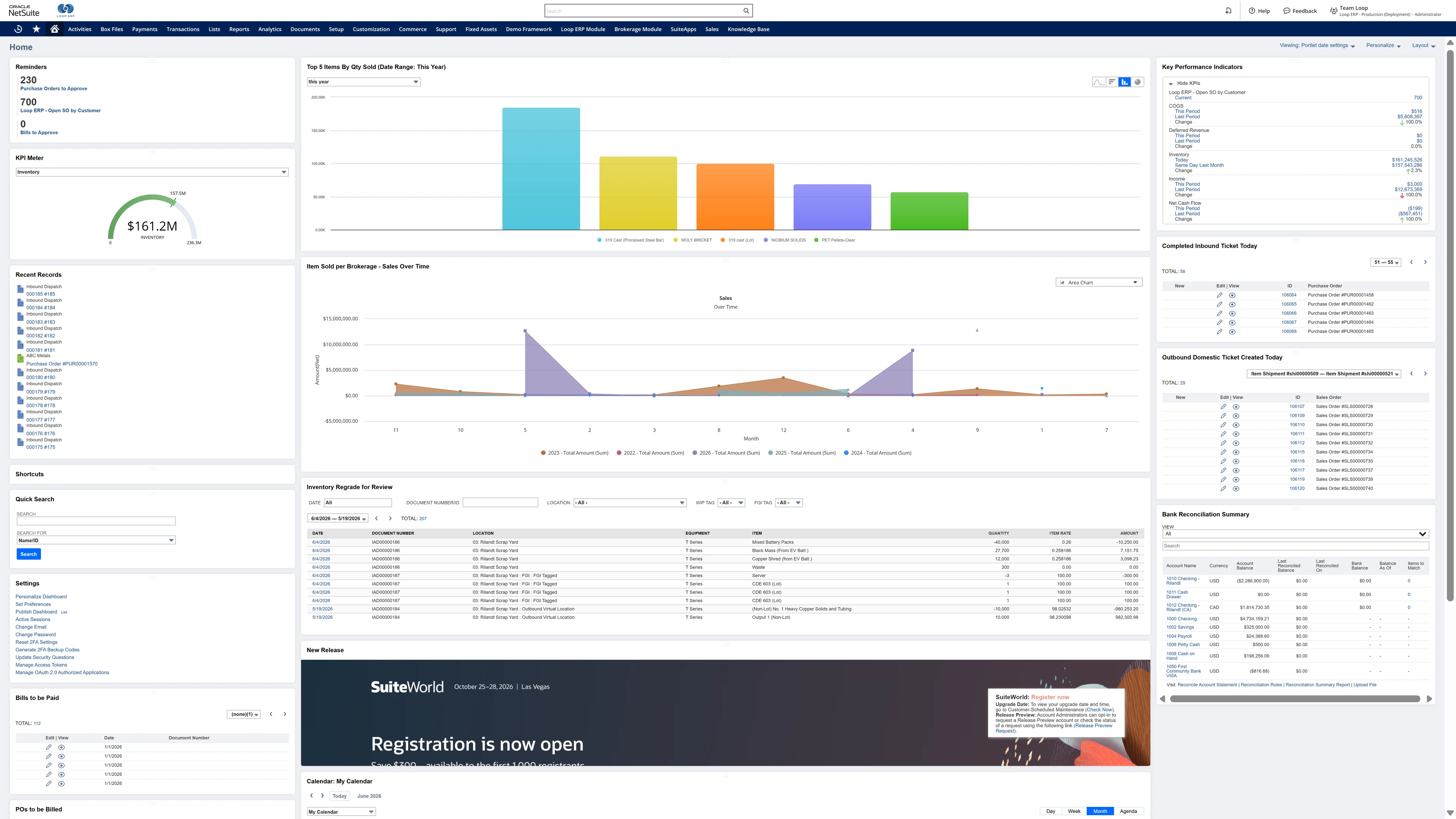
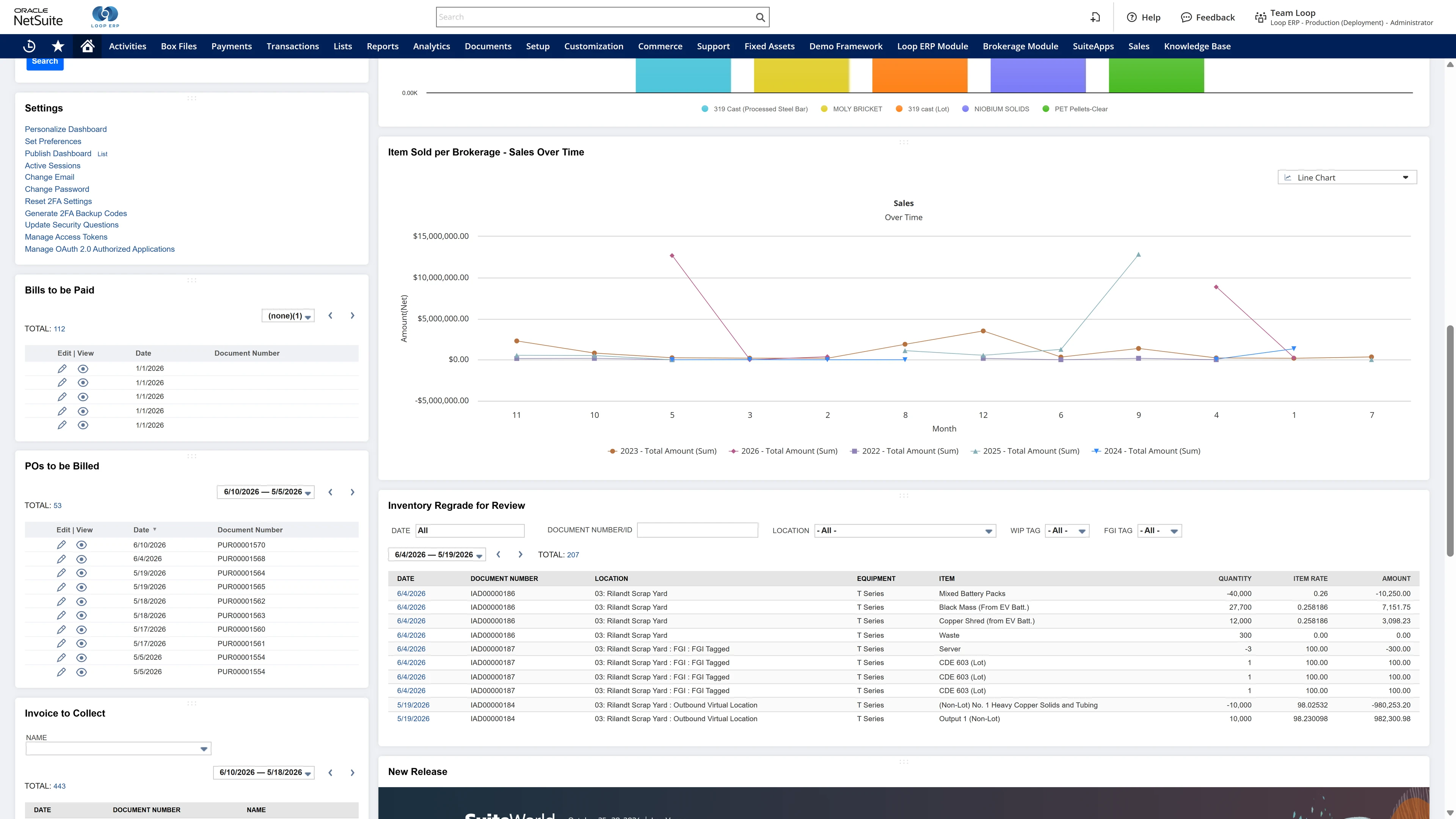
Real-Time Dashboards

Real-World Decisions

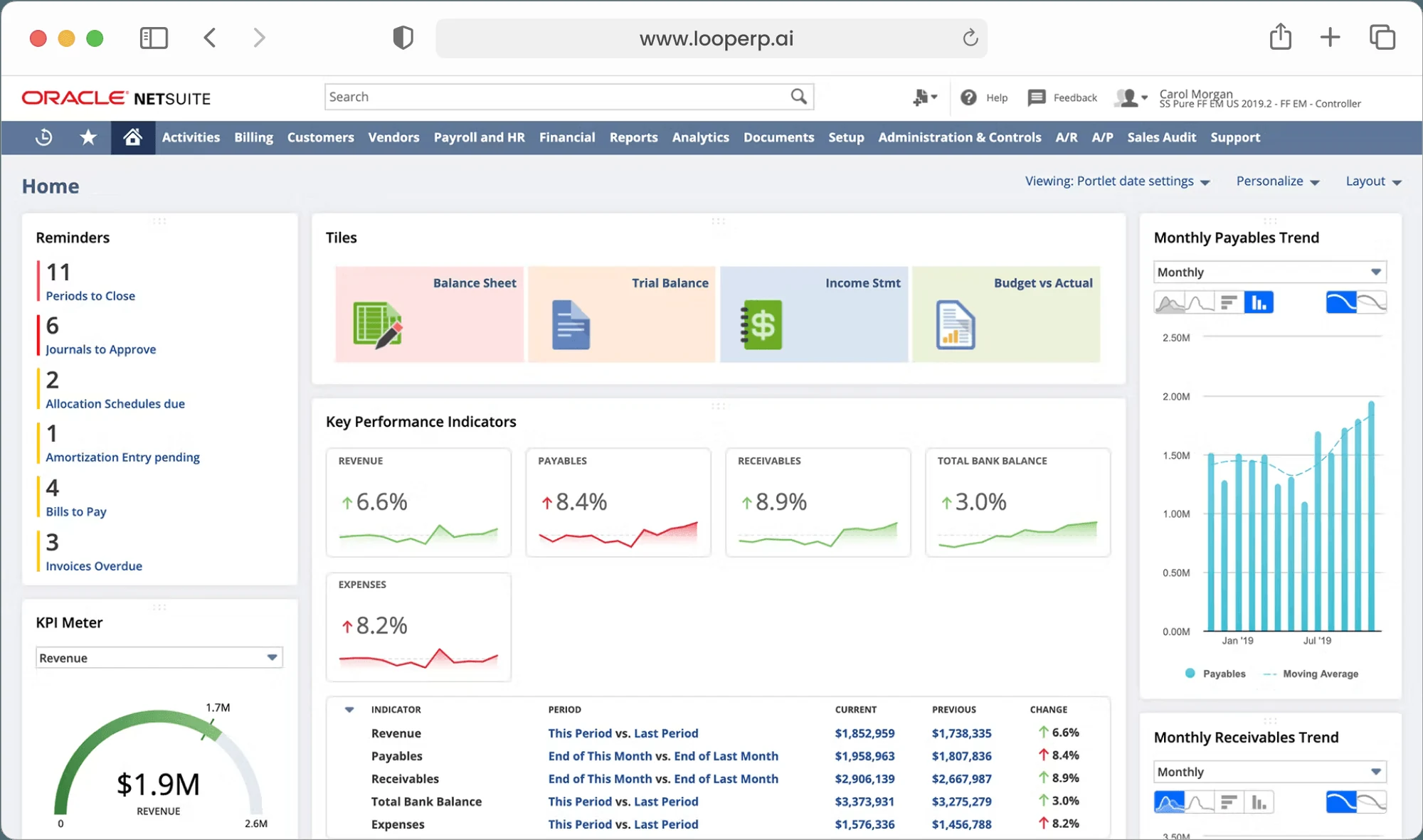
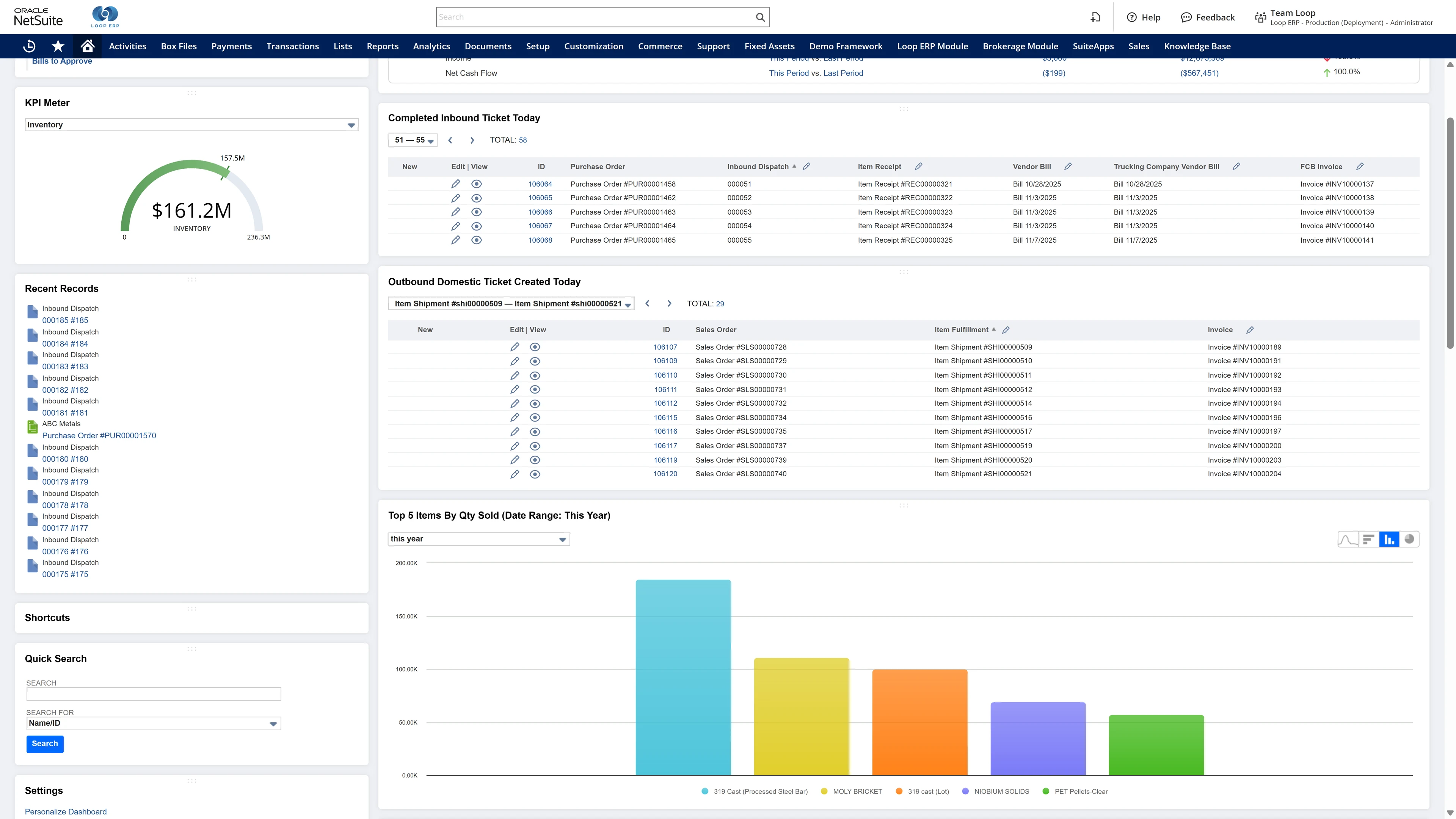
  • Monitor daily tonnage, plant output, and haul cycle times
  • Track inventory drawdown, product mix, and load counts by site
  • ESG views: reduced haul miles, recycled tons processed, fuel savings
Loop ERP Dashboard
icon

Empower

Your Entire Operation

Scrap the Spreadsheets. Upgrade to Loop ERP.

Modernize ticketing, dispatch, production visibility, and financial control with a system built for aggregate operators.

Ready to upgrade your material operations?

Book Your Demo

Key Features & Benefits

Highlights at a Glance

Feature

✅ All-in-One Platform

⚖️ Scale & Camera Integration

🧠 AI Assistance

💵 Built-in Finance

📊 Role-Based Dashboards

♻️ Material Workflows

📱 Mobile Applications

🔄 Track & Trace

✅ Quality Control

🔗 Netting

💲 Flexible Pricing Module

Benefit

No third-party tools required

Verified loads and traceable condition data

Optimize pricing, routing, and QA decisions

Vendor settlements, customer billing, and profitability tracking

Real-time insight for yard, QA, sales, and finance teams

Metals, plastics, e-waste, paper, fiber, and more

Field, yard, and dock tools in one platform

Lot-level traceability from receipt to resale

Integrated grading and non-conformance workflows

Settle deductions and rebates across multi-party deals

Dynamic pricing by index, grade, and spec

Frequently Asked Questions

Everything You Need to Know About Loop ERP

Does Loop ERP include ESG reporting for aggregate operations?

icon

Loop tracks recycled tons processed, route efficiency, and sustainability metrics. That data is available for reporting and audits without any manual data collection, useful for projects with sustainability requirements or customers asking for documentation.

How does Loop ERP handle customer billing and vendor settlements?

icon

Billing is generated directly from scale ticket data, so invoices reflect verified weights and agreed-upon terms without manual assembly. Vendor settlements support deductions, rebates, and multi-party deal structures. Profitability tracking runs at the material stream, deal, and partner level.

What material types does Loop ERP support?

icon

Loop handles crushed stone, sand, gravel, ready-mix, asphalt production, recycled materials, and blended mixes. Each material type has configurable workflows, so the system reflects how your operation actually processes and prices each product.

Can Loop ERP manage operations across multiple quarry or plant sites?

icon

Yes. Loop is built for multi-site operations. You can monitor daily tonnage, plant output, haul cycle times, and inventory levels across sites from a single dashboard. Finance and dispatch stay coordinated regardless of how many locations you're running.

How does Loop ERP handle scale ticket data?

icon

Every transaction in an aggregate operation starts at the scale house. Loop captures certified weights directly from connected scales and automatically pushes that data into inventory, billing, and reporting. No one re-enters a ticket. No reconciliation between systems. The scale ticket drives everything downstream.

Is Loop ERP built for aggregate operations specifically, or is it a general ERP adapted for the industry?

icon

Loop is designed for materials-based operations, including quarries, pits, concrete plants, and asphalt facilities. General ERP systems require significant customization to handle the way aggregate businesses actually work. Loop is built around scale tickets, material workflows, and site-level dispatch from the ground up, not bolted on after the fact.

How does Loop ERP handle supplier settlements and vendor payments?

icon

Loop ERP automates supplier payments based on ticket data, net weight, and grade. It supports deductions, freight netting, multi-party deals, consignment sales, and joint ventures. Buyers receive invoices that break out surcharges, alloy adjustments, and transport costs — all generated from the same ticket data that drives operations.

What platform is Loop ERP built on?

icon

Loop is built on Oracle NetSuite, which means you get enterprise-grade accounting, CRM, and financial reporting built in. There is no separate accounting system to sync with, and no additional middleware between your operations and your books.

How secure is Loop ERP?

icon

Loop ERP runs on Oracle NetSuite, so your data lives inside enterprise cloud infrastructure with encryption in transit and at rest, role-based access, and audit logging on every transaction. Ticket edits, grade changes, and settlement adjustments all carry a user stamp and timestamp. If a record is overridden or reclassified, you can see who did it and when, which matters for disputes, audits, and internal controls.

How does Loop ERP help with sustainability reporting?

icon

Loop ERP pulls data straight from the same ticket and inventory records that run the yard, so sustainability reports reflect what actually moved, not a separate data set. Real-time dashboards track tons recycled by material, carbon saved, and landfill diversion by facility or customer. When a buyer or regulator asks for proof, you can produce a traceable record tied to specific loads, grades, and destinations instead of rebuilding it from spreadsheets.

Can Loop ERP handle large-scale operations?

icon

Yes. Loop ERP is built on NetSuite, the same platform used by enterprise recyclers, multi-yard operators, and shredder networks. It handles multi-entity accounting, consolidated reporting across locations, high daily ticket volumes, and complex settlement structures without slowing down. If you are running one yard today and five next year, you do not need to replatform to keep up.

How long does it take to implement Loop ERP?

icon

Implementation time varies, depending on the number of locations, material streams, and integrations involved (scales, cameras, payment processors, third-party logistics). The Loop ERP team handles data migration, workflow configuration, scale integration, and training in parallel, and we work directly with your operations leads, not just IT, so the system matches how your yard actually runs on day one.

What makes Loop ERP different from other ERP systems?

icon

Most ERP systems treat inventory as static boxes on a shelf. Loop ERP is built for inventory that changes grade, weight, and value at every step, which is how scrap, recycling, aggregate, brokerage, and similar materials-based businesses actually work. It is also NetSuite-native, so you do not need a separate accounting package, a middleware layer, or a patchwork of integrations to get from inbound ticket to closed financials. One login, one system, one source of truth for operations and finance.